
If you’re new to working out and looking to get stronger, it’s easy to feel overwhelmed by all the routines and advice out there. I’ve been right where you are, and I know how much a simple, proven beginner strength training routine can help. This approach doesn’t require fancy equipment, a gym membership, or loads of time. All you really need is some basic knowhow, consistency, and a little motivation. Strength training for beginners at home and in the gym is definitely more doable than most people think.

Who This Routine Is For
This is designed for anyone ready to start getting stronger, no previous weightlifting or gym experience required. The beginner strength workout works great if you want a solid starting point, whether you’re at home with just your bodyweight or in a gym with basic equipment. It’s suitable for teens, adults, and even older adults wanting to feel stronger and more capable in their daily lives.
What Results Beginners Can Expect
If you stick with a beginner weight training routine, results start rolling in quicker than you might expect. At first, you might notice daily tasks, like carrying groceries or climbing stairs, feel easier. Within a few weeks, you’ll likely see increased energy, better posture, and some muscle definition. Over one or two months, strength gains really build up, supporting fat loss, boosting confidence, and reducing aches and pains. It’s pretty cool to spot the difference even after a short time.
Why Strength Training is a Smart Starting Point
Building muscle isn’t just for bodybuilders. Strength training is super useful for boosting metabolism, improving joint health, and protecting yourself from injuries. Unlike long hours of cardio, a beginner full body strength workout makes your muscles adapt, burn calories even after you’re done, and helps you look toned. Plus, you’re in control of the pace so you can easily fit it around a busy schedule. You’ll also build the foundation for other types of fitness while keeping things efficient.
Benefits of Strength Training for Beginners
- Builds Lean Muscle: When you challenge your muscles, they grow stronger and more defined, which can boost metabolic rate and performance in everyday life.
- Supports Fat Loss: Strength workouts help your body burn more calories throughout the day, making it easier to lose fat without needing endless cardio.
- Improves Everyday Strength: Lifting, moving, and even simple chores get much easier, making you feel more independent and energized.
- Reduces Injury Risk: Stronger muscles protect your joints and spine, making you less likely to get those annoying strains or injuries.
- Boosts Confidence and Energy: Not only will you get a physical bump in strength, but your energy and self-image will likely see a boost too. Workout wins build momentum across your whole life.
Basic Strength Training Principles
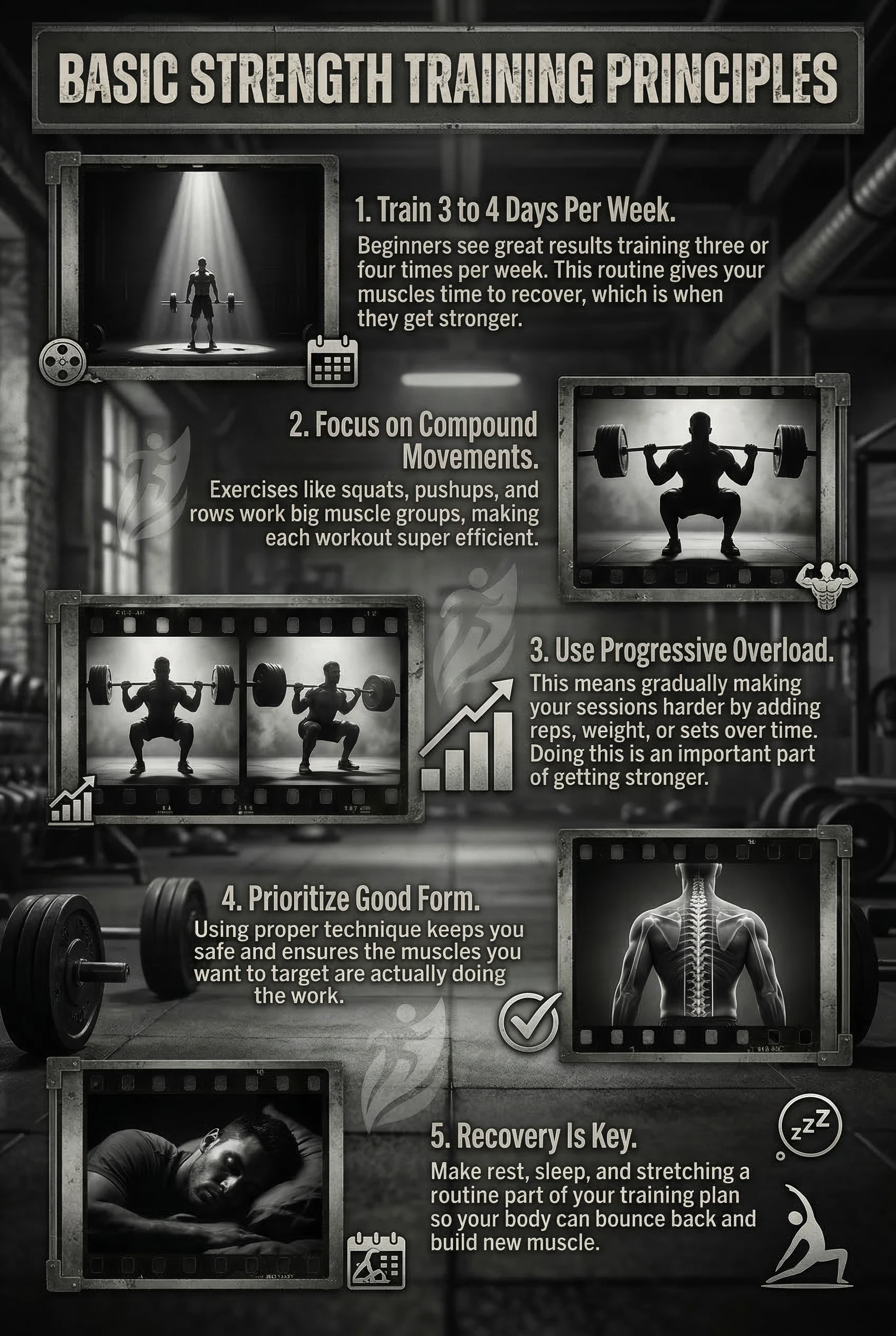
- Train 3 to 4 Days Per Week: Beginners see great results training three or four times per week. This routine gives your muscles time to recover, which is when they get stronger.
- Focus on Compound Movements: Exercises like squats, pushups, and rows work big muscle groups, making each workout super efficient.
- Use Progressive Overload: This means gradually making your sessions harder by adding reps, weight, or sets over time. Doing this is an important part of getting stronger.
- Prioritize Good Form: Using proper technique keeps you safe and ensures the muscles you want to target are actually doing the work.
- Recovery Is Key: Make rest, sleep, and stretching a routine part of your training plan so your body can bounce back and build new muscle.
Beginner Strength Training Routine
Weekly Workout Schedule
Here’s a simple plan you can follow for your beginner full body strength workout, either at home or in the gym. All you have to do is set aside three days for resistance work, and add some light movement or stretching on other days as you wish. This schedule is easy to stick to and covers all your bases for building initial strength.
- Monday: Full Body Workout 1
- Wednesday: Full Body Workout 2
- Friday: Full Body Workout 1
- Optional: Light activity (like walking or stretching) on off days
Switch between Workout 1 and Workout 2. You’ll be ready for more variety after a few weeks, but this rotation is perfect for building a base. Remember, consistency over intensity will get you farther at this stage.
Full Body Workouts
If you’re doing strength training for beginners at home, you can use just your bodyweight or add resistance bands and dumbbells. In the gym, all of these apply, or you can use machines for extra support. Don’t stress about equipment—it’s about working your muscles with what you have.
Click here for a beginner friendly, 30 minute home workout that keeps it simple,
Exercise List With Sets and Reps :
Workout 1:
- Bodyweight Squats or Goblet Squats (holding a dumbbell): 3 sets of 10 to 12 reps
- Knee Pushups or Standard Pushups: 3 sets of 8 to 12 reps
- Bent-Over Dumbbell Row or Resistance Band Row: 3 sets of 10 reps per arm
- Standing Overhead Press (dumbbells or band): 3 sets of 10 reps
- Glute Bridge: 3 sets of 12 to 15 reps
- Plank: 3 sets of 20 to 30 seconds
Workout 2:
- Reverse Lunges (bodyweight or holding weights): 3 sets of 8 reps per leg
- Incline Pushups (hands on an elevated surface): 3 sets of 10 to 12 reps
- Seated Band Row or Dumbbell Row: 3 sets of 10 reps
- Wall Sit: 3 sets of 30 to 40 seconds
- Standing Side Leg Raises: 3 sets of 12 reps per side
- Bird Dog (opposite arm and leg): 3 sets of 8 reps per side
How to Progress the Routine
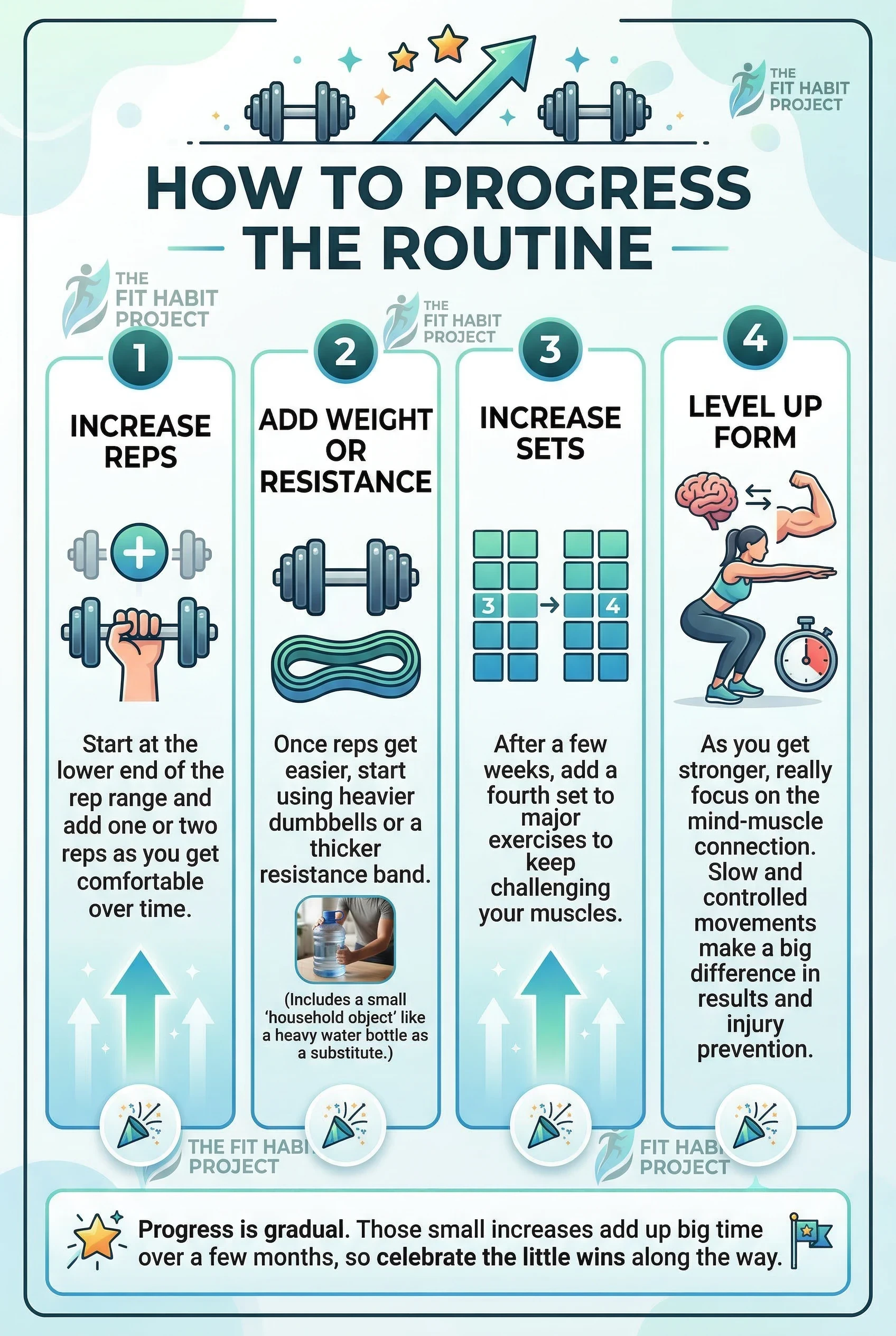
- Increase Reps: Start at the lower end of the rep range and add one or two reps as you get comfortable over time.
- Add Weight or Resistance: Once reps get easier, start using heavier dumbbells or a thicker resistance band. If you’re at home, even household objects can make good substitutes!
- Increase Sets: After a few weeks, add a fourth set to major exercises to keep challenging your muscles.
- Level Up Form: As you get stronger, really focus on the mind-muscle connection. Slow and controlled movements make a big difference in results and injury prevention.
Progress is gradual. Those small increases add up big time over a few months, so celebrate the little wins along the way.
Common Beginner Mistakes
- Doing Too Much Too Soon: Going from zero to five or six days of training weekly is tempting, but recovery matters just as much as the workouts.
- Skipping Rest Days: Muscle growth actually happens when you rest. Pushing through soreness or fatigue often leads to burnout or injury, so don’t skip rest days!
- Poor Exercise Form: Rushing sets or using momentum instead of controlled movements can strain joints and reduce results. Checking your form against a mirror or a video online really helps keep things on track.
- Not Tracking Progress: A lot of beginners forget to write things down—keeping a simple log lets you see improvement and builds motivation.
How Long Until You See Results?
- Weeks 1 to 2: You’ll mostly focus on learning movements and building that mind-muscle connection. Soreness is normal, but you should also feel more confident each week. Keep showing up—it gets easier.
- Weeks 3 to 4: Actual strength gains show up. Weight feels lighter, and your balance or coordination starts to click. Don’t be surprised if you start noticing firmer muscles or steadier movement.
- Weeks 6 to 8: Visible progress starts to roll in. Muscles look and feel firmer, workouts get easier, and everyday tasks seem way less tiring. Take some before and after photos so you can spot the difference for yourself.
Tips for Staying Consistent
- Schedule Workouts: Put your sessions in your phone calendar, just like you would a meeting or appointment. If you plan ahead, you’re less likely to skip.
- Track Progress: Write down your exercises, weights, reps, or resistance bands you use. Seeing progress on paper is surprisingly motivating—it helps remind you of how far you’ve come, even when you have an off day.
- Focus on Building the Habit: Don’t stress about perfection. A so-so workout still beats skipping altogether. Consistency is what brings serious results over time. You can try this beginner weekly workout schedule.
- Get a Friend Involved: Working out with a buddy or sharing your goals can help keep you accountable and make it more fun.
FAQ Section
How often should a beginner train each week?
Three to four sessions per week work really well. That’s enough to get stronger without overdoing it or getting worn out.
Do I need weights to start strength training?
Nope! You can get a great beginner strength workout using just your own bodyweight. Adding resistance bands or light dumbbells helps later, but you can absolutely start with bodyweight movement only.
How long does a beginner strength workout take?
Most routines take 30 to 40 minutes tops, including the warmup. If you’re short on time, you can cut it down even more and still see good progress by focusing on the main exercises.
Ready to Get Started?
Kicking off a beginner weight training routine is a fantastic way to boost strength, support fat loss, and improve life in loads of ways. Start small, focus on form, and just keep showing up, even if it’s just for one or two workouts a week. The real gamechanger is building the habit. Give yourself permission to be a beginner, and soon you’ll be surprised by your own progress.
Want more tips or simple workout ideas? Click her for my Beginner Workout Plan. Also, Drop your questions below or bookmark this guide and come back whenever you need a boost. Your future, stronger self will thank you!