
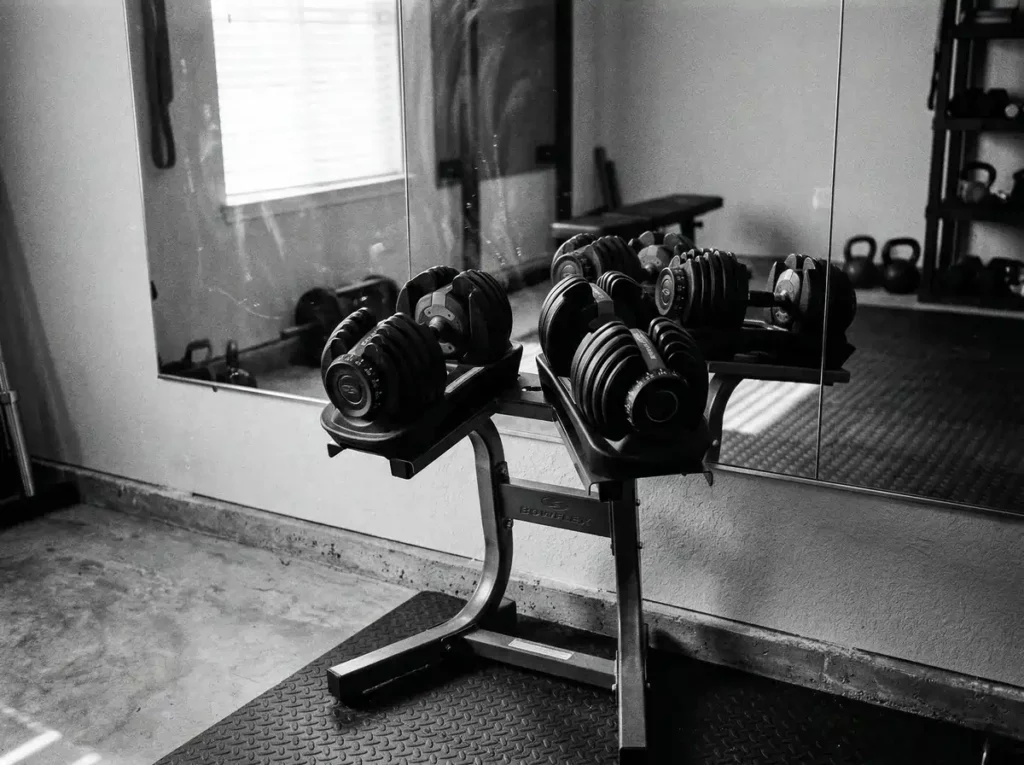
Dumbbells stand out as one of the most user friendly and approachable ways to jumpstart your strength training at home. They’re easy to store, simple to use, and you can put together real results with nothing more than a couple of basic weights. Whether you want to lose fat, pump up your muscle tone, or just feel stronger, a beginner dumbbell workout can slot right into your routine. No gym membership or complicated equipment required.
Feeling unsure about how to kick off your at home dumbbell workout adventure? I’ve been in that same spot. With a bit of guidance and the right beginner dumbbell workout plan, you’ll soon build muscle, burn fat, and get results you can both see and feel. You don’t need to be an athlete to start seeing improvement—just the right attitude and plan.
This updated 2026 guide covers everything you need, from picking your first dumbbells and the basics of a full body dumbbell workout to forming habits that really last. I’ll also walk through a straightforward dumbbell routine for beginners, add some easy dumbbell exercises you can do right away, and answer the most common questions I hear from those just getting started.
1. Why Choose a Beginner Dumbbell Workout?
The world of fitness can feel overwhelming with all the options. I always recommend dumbbells for beginners, and here’s why:
- Dumbbells are versatile and great for both strength and fat loss.
- They work for every major muscle group in full body workouts.
- You can scale them up or down depending on your needs and goals.
- They’re perfect for home strength training routines—you don’t need fancy machines.
- They make building balanced strength and coordination much simpler compared to other equipment.
Whether you want to know how to start weight training at home or you’re looking for muscle building for beginners, a beginner dumbbell workout plan is an excellent way to get stronger and fitter, right in your living room. Using dumbbells helps you skip a crowded gym and still achieve your goals.
2. What Weights Should Beginners Start With?
Choosing the right dumbbells is super important when putting together your home setup. If you’re brand new, I suggest starting with a light to medium pair—think 5 to 15 lbs (2-7 kg) per dumbbell. You want weights that challenge you, but still let you perform each rep with solid form. Don’t be afraid to go lighter at first and build up. Focus on learning the movement with control rather than ego-lifting heavy weights right away.
If you’ve dabbled in resistance training before and feel comfortable with a heavier load, you can go up to about 20 lbs (9 kg). Adjustable dumbbells are especially handy here since you can change the weight as you get stronger and more experienced, making your routine more flexible and futureproof.
Pro Tip:
- If one pair isn’t enough, grab two different weights (like a light and a medium set). Switch between them depending on the exercise and how strong you feel. For example, use lighter weights for overhead exercises and heavier ones for squats or deadlifts.
- If you’re on a budget, secondhand marketplaces often have quality dumbbells for less. Check online classifieds or local sports stores.
3. Easy Dumbbell Exercises for Beginners
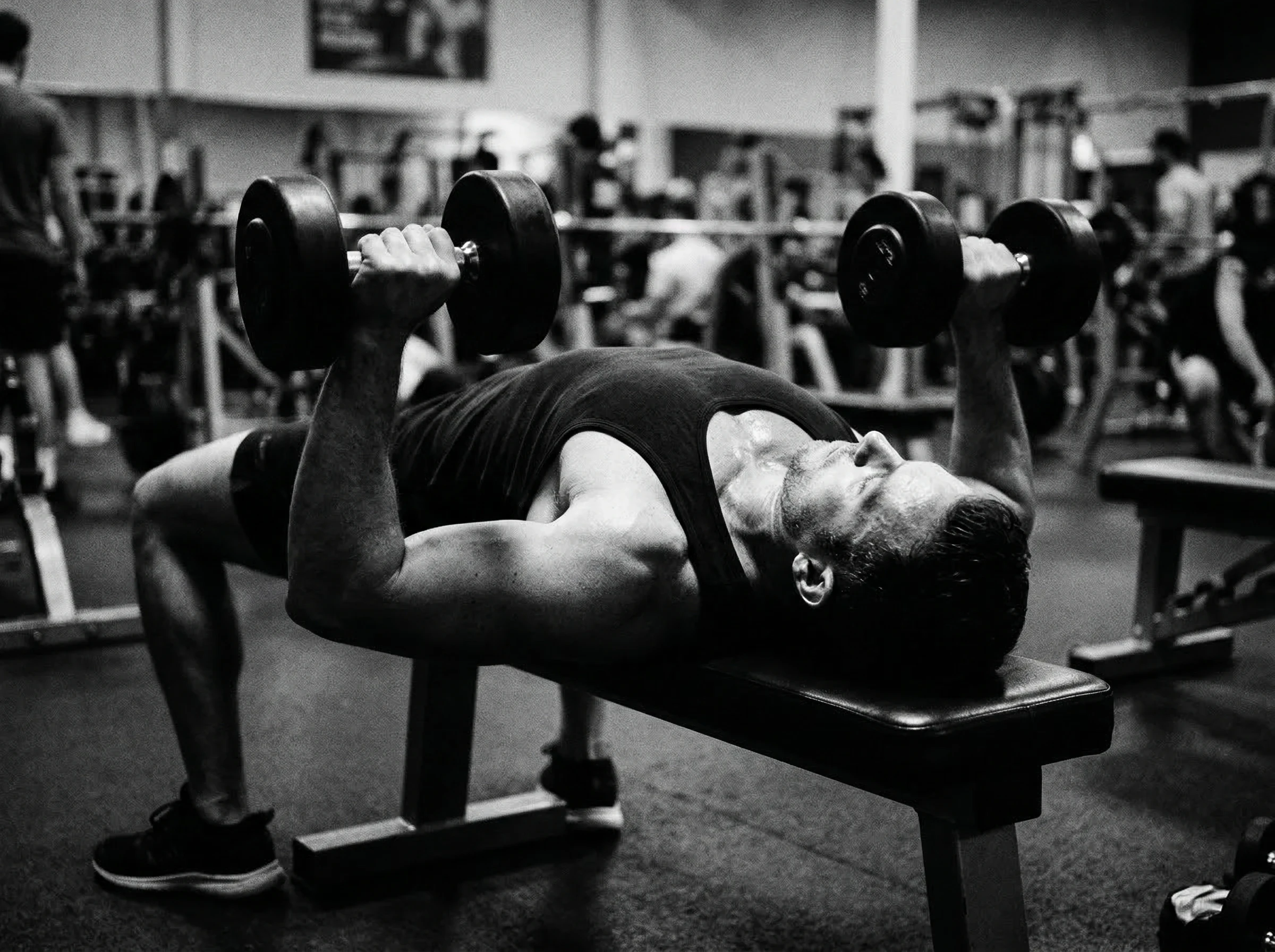
Building a solid foundation starts with picking simple dumbbell exercises that will teach you how to move safely and with purpose. These are core movements that help form a balanced program and build strength head to toe. Try each one with a light dumbbell until you feel confident in your form. Slowly add weight when you’re comfortable.
- Goblet Squat: Hold one dumbbell close to your chest and squat down, keeping your chest up and knees out. This move targets your legs and glutes while encouraging strong posture.
- Dumbbell Chest Press: Lying on your back (on a mat or bench), press both dumbbells up over your chest, elbows at about 45 degrees. This engages your chest, shoulders, and triceps.
- Bentover Row: With a dumbbell in each hand, hinge at the hips with a flat back and row the weights up toward your ribs, squeezing your shoulder blades. Great for upper back and arms.
- Standing Overhead Press: Press dumbbells from your shoulders straight overhead, keeping your core engaged and avoiding a big arch in your lower back. You’ll feel your shoulders and core working in tandem.
- Reverse Lunge: Step one foot backward, lower your body down under control, then return to standing. Switch sides each rep for even muscle activation across both legs and your core.
- Dumbbell Deadlift: With weights at your sides, hinge at the hips and lower the weights toward the ground, maintaining a flat back. This movement targets your hamstrings, glutes, and lower back.
These exercises make up the backbone of any quality beginner strength training plan using dumbbells. If you’re just starting with resistance training, keep it simple—master these moves before trying anything more advanced. It’s not about variety at first, it’s about nailing the basics. When you can easily perform 12 reps with strong form, you’re ready to either bump up the weight or add new variations.
4. How Many Reps for Beginners? Sets, Reps, and Rest Explained
This is probably the most common question: how many reps for beginners should you do? When you’re designing a full body workout with dumbbells, here’s a clear guideline to keep you on track:
- Reps: Go for 8 to 12 reps per set for each exercise. This range builds both strength and muscle for beginners.
- Sets: Start out with 2 to 3 sets per exercise to avoid overdoing it.
- Rest: Take at least 60 seconds between sets for recovery. If you need more time, there’s no shame in taking it. Listen to your body.
This approach is balanced: enough work to step up muscle growth and strength, but not so much that you burn out. If you can breeze through 12 reps without any challenge, try a heavier dumbbell. If you’re struggling to get even 6 reps, use a lighter weight until you build up more strength.
5. The Beginner Dumbbell Workout Plan
Here’s a sample beginner dumbbell workout plan built for a full body routine you can do at home. All you need is a pair of dumbbells and enough space to move. This program gives you a proper introduction to strength training while supporting overall health, posture, and daily function.
Below is a printable workout log you can use to follow and track your progress.
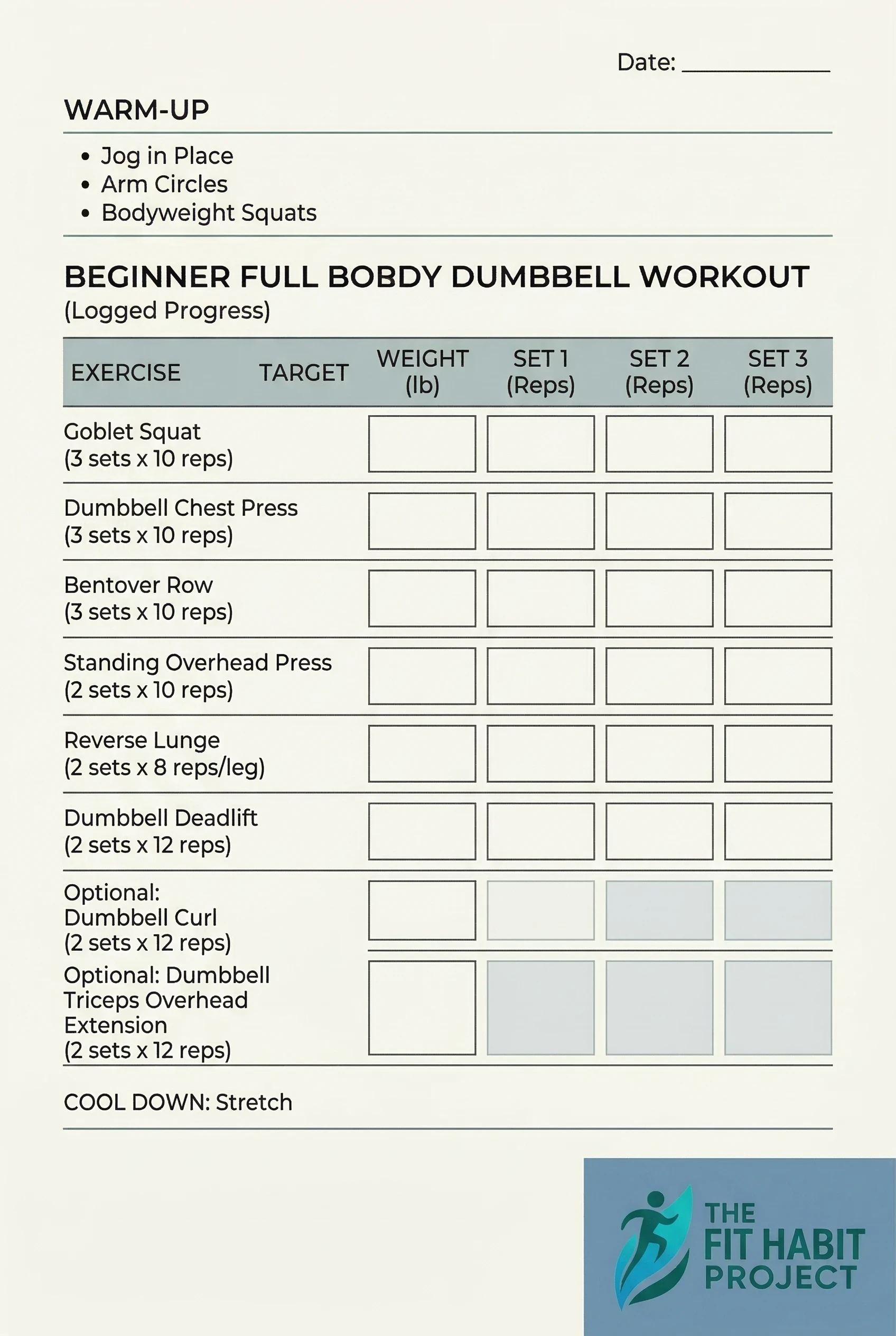
Beginner Full Body Dumbbell Workout
- Goblet Squat – 3 sets x 10 reps
- Dumbbell Chest Press – 3 sets x 10 reps
- Bentover Row – 3 sets x 10 reps
- Standing Overhead Press – 2 sets x 10 reps
- Reverse Lunge – 2 sets x 8 reps per leg
- Dumbbell Deadlift – 2 sets x 12 reps
- Optional: Dumbbell Curl – 2 sets x 12 reps
- Optional: Dumbbell Triceps Overhead Extension – 2 sets x 12 reps
Aim to work through this beginner routine two to three times per week for steady gains. Don’t skip your rest days—muscles grow and repair when you aren’t lifting. On off-days, consider going for a walk, stretching, or some light yoga to stay active without over-stressing your body.
This straightforward at home dumbbell workout covers every major muscle group, setting you up with a legit foundation for both muscle building and fat loss. As you advance, feel free to add sets, reps, or weight for extra challenge. Consistency and progression are your best friends here.
6. How to Start Weight Training at Home: Setting Up Your Space
You don’t need a ton of gear or space to start a dumbbell routine for beginners at home. Most people can get going with a yoga mat-sized area. Here’s a quick checklist for your home strength training routine:
- Dumbbells (start with 1-2 pairs or adjustable weights)
- Mat or towel for floor work to cushion your joints
- Optional: a sturdy bench, step, or ottoman for presses and support work
- Water bottle and towel to stay fresh
- Good lighting and your favorite playlist to boost your mood
The top advantage of a dumbbell workout is that you don’t need a fancy home gym. Just a safe, comfortable space you can come back to regularly is all that’s necessary for lasting progress. Make it your own and use it as a place for self-improvement.
7. Common Beginner Mistakes and How to Avoid Them
- Going Too Heavy, Too Soon: It’s tempting to grab the heaviest weights possible, but starting light helps you learn good form and reduces injury risk. Save the big weights for later when your body’s ready.
- Skipping the Warmup: Warming up is key—get your blood flowing with five minutes of light movement. Try marching in place, arm circles, and a few bodyweight squats for a simple but effective warmup.
- Using Momentum: Swinging the weights turns the movement into a momentum game, not a muscle-builder. Move slowly and with control, especially when you’re tired.
- No Progression: Your body adjusts quickly to new routines. If your workout feels too easy, add reps, more weight, another set, or a new exercise to keep stepping up your full body dumbbell workout.
- Poor Form for Speed: Sacrificing technique for quick reps puts your joints at risk and limits your gains. Take your time to do each move the right way; quality over quantity is the secret.
Making these small adjustments as you go keeps your at home dumbbell workout safe, productive, and rewarding. It’s better to move slow and steady than to rush for fast results.
8. Tips for Staying Motivated (and Actually Loving Your Workout)
- Track Your Progress: Recording weights, sets, and reps gives you positive feedback and keeps you accountable. A notebook or simple app is all you need.
- Keep It Short and Sweet: You don’t need hour-long workouts. A focused 20–30 minute session is more than enough for most people to see great results.
- Mix It Up: If you feel bored, swap out a couple of exercises, change your rep range, or add a circuit finisher to keep it exciting. Variety beats monotony every time.
- Reward Yourself: Small rewards, like new gear, a healthy snack, or an episode of your favorite show after a completed week, can boost motivation.
- Set Micro-goals: Instead of aiming for a big end goal, try smaller milestones—like hitting a new rep count or adding a workout each week. These little wins will keep you fired up.
If you miss a workout, no sweat; just pick up where you left off without beating yourself up. Consistency is the true driver of progress, not strict perfection. The more you show up, the better your results will be over time.
9. Frequently Asked Questions: Dumbbell Workout for Beginners
How often should I do a beginner dumbbell workout?
Two or three sessions per week is an excellent starting place. Your muscles need recovery time to grow. Rest days are essential—use them for walks, light stretching, or yoga to help with recovery.
Can I really lose fat just with a dumbbell-only workout plan?
You bet! When you combine your full body dumbbell workout with balanced meals, you’ll start seeing real changes. Dumbbells are great for both muscle tone and fat loss. Pair your training with some regular cardio and healthy foods, and you’ll have a fat loss workout at home that really works.
How quickly will I see results?
Most beginners spot improvements in energy and strength and muscle tone within three or four weeks—sometimes even sooner with consistency. Visibly firmer muscles and fat loss typically show up after six to eight weeks if you stick to a solid plan.
Do I need a gym or fancy equipment?
Nope! A couple of dumbbells and enough space to move are all you truly need for resistance . Down the road, adding a bench, a kettlebell, or a resistance band can offer new challenges—but they’re not required at the start.
What if I can’t do all the reps?
That’s totally normal. Start with what you can manage, and slowly build up. The key is consistency and gradual progress—not perfection. Even doing half the recommended reps with great form is better than skipping your workout.
10. Your Beginner Dumbbell Workout Action Plan
- Pick weights suitable for your current strength level (light to medium to start).
- Set aside 20 to 30 minutes, two or three times per week, dedicated to your full body workout with dumbbells.
- Work through the beginner dumbbell workout plan listed above, keeping a log of your reps, sets, and weight used each session.
- Prioritize perfect form and steady progression as you build confidence and strength—add weight, reps, or sets over time as it feels right.
- Sprinkle in other healthy habits, like walking or stretching, on your rest days to help recovery and keep your body moving.
Getting started often feels like the toughest hurdle, but the benefits are undeniable. With this beginner dumbbell workout, you’ll see your fitness, strength, and confidence shoot up before you know it. Share what excites you about your new home strength training routine—and let’s motivate each other to stick with it. The first step is all it takes to start feeling better, stronger, and ready for more!
Read more about setting up your plan and schedule that actually sticks!
The Perfect Weekly Workout Schedule For Strength, Fat Loss & Consistency
The Best Beginner Workout Plan For 2026 (Simple, Effective & Sustainable)